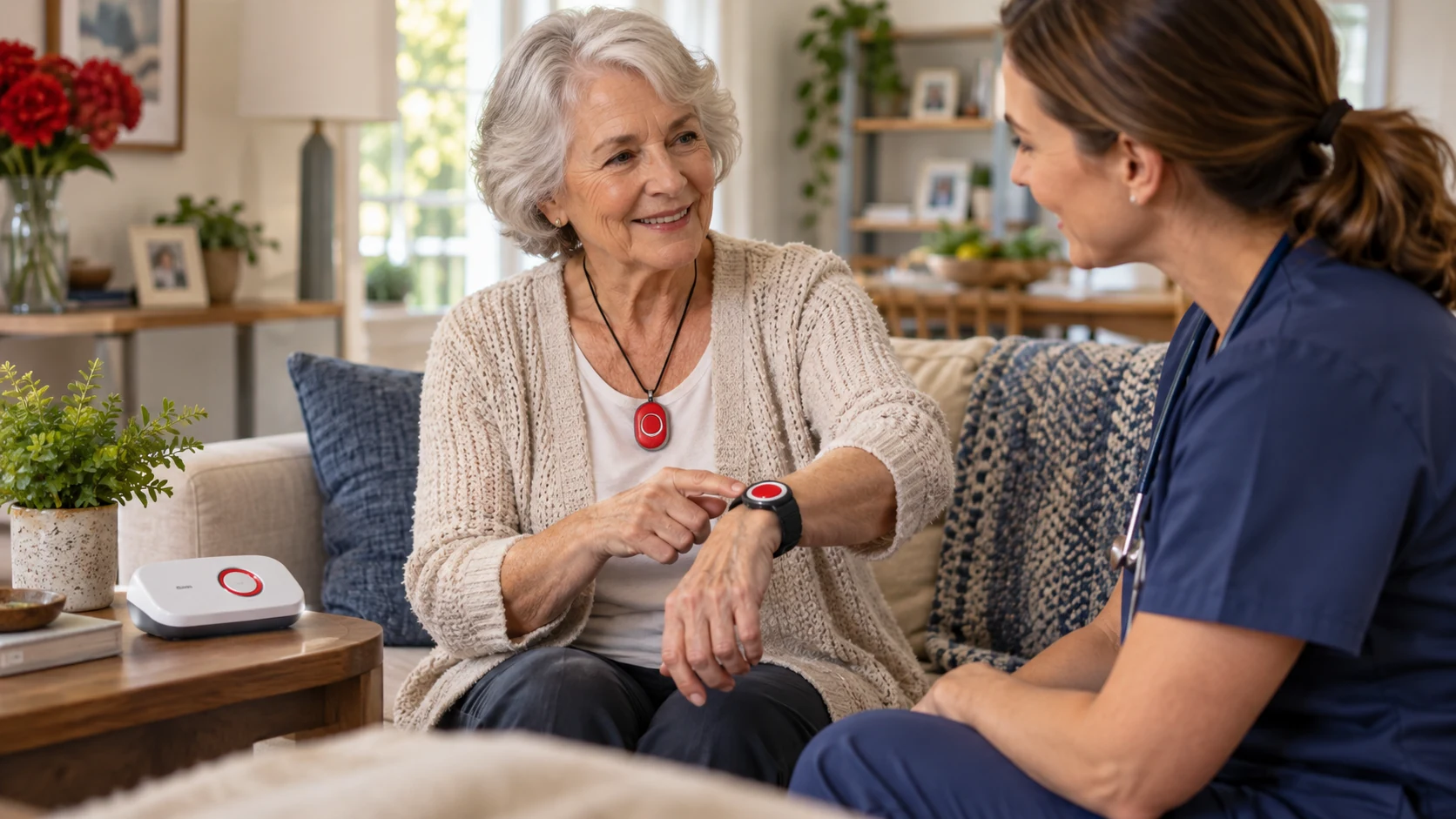
A Personal Emergency Response System (PERS) — sometimes called a medical alert system or medical alert button — is one of the simplest and most effective tools available to help older adults live independently at home. If you fall, feel unwell, or face any emergency, pressing a small button connects you immediately to a 24/7 monitoring center that can send help.
In 2026, more Medicare Advantage plans than ever include PERS as a supplemental benefit, often at no extra cost to members. Here's what you need to know.
What Is a Personal Emergency Response System?
A PERS is a two-component system: a wearable device (usually a pendant button or wristband) and a base station or cellular connection that links you to a monitoring center. When you press the button, an operator answers immediately — usually within 30 seconds — and can:
- Talk with you through the base station speaker
- Contact your designated family members or caregivers
- Dispatch police, fire, or emergency medical services
- Stay on the line with you until help arrives
Types of PERS Devices
| Type | Best For | Key Feature |
|---|---|---|
| In-Home (landline or cellular) | Primarily home-based seniors | Base station with large range throughout home |
| Mobile GPS | Active seniors who go out | Works anywhere with cellular coverage |
| Smartwatch / Wearable | Tech-comfortable users | Discreet; may track steps and heart rate too |
| Fall Detection | Seniors with fall history | Automatically alerts without pressing button |
Does Medicare Cover PERS?
Original Medicare (Parts A and B) does not cover PERS devices. Medicare classifies medical alert systems as consumer electronics rather than durable medical equipment, so they fall outside the standard benefit.
However, Medicare Advantage (Part C) plans are permitted by CMS to include PERS as a supplemental benefit for chronically ill enrollees or as a general extra benefit. In 2026, thousands of Medicare Advantage plans across the country include PERS coverage — many at $0 additional cost.
Who Benefits Most from a PERS?
A PERS is especially valuable for seniors who:
- Live alone or spend significant time home alone
- Have a history of falls or balance issues
- Manage chronic conditions like heart disease, diabetes, or epilepsy
- Have limited mobility or use a walker or cane
- Have family members who worry about them being unreachable in an emergency
What to Look For
If you're choosing a PERS on your own (or selecting from what your plan offers), consider these features:
- 24/7 U.S.-based monitoring — ensure there's always a live person available
- Fall detection — automatically calls for help if a fall is detected, even if you can't press the button
- GPS capability — mobile devices let you get help outside the home
- Waterproof design — most falls happen in the bathroom; your device should be shower-safe
- Long battery life — look for at least 24–72 hours of battery
- Two-way voice communication — so you can speak directly with the operator
How Much Does a PERS Cost?
If your Medicare Advantage plan covers it, the cost to you may be $0. Without insurance, expect:
| Cost Item | Typical Range |
|---|---|
| Equipment/device fee | $0–$199 one-time |
| Monthly monitoring | $25–$60/month |
| Activation fee | $0–$99 |
| Fall detection add-on | $5–$10/month extra |
Want to find a Medicare Advantage plan that includes PERS coverage and other extra benefits? A licensed advisor can help you compare plans in your area — at no cost.
Call 1-866-340-3441Frequently Asked Questions
Can I get a PERS through Medicaid?
Yes, in many states. Medicaid HCBS (Home and Community Based Services) waivers often cover PERS for qualifying individuals who need the device to remain safely at home. Check with your state Medicaid office or a licensed agent for details specific to your situation.
What happens if I accidentally press the button?
Simply tell the operator it was an accidental activation. No emergency services will be sent. There's no penalty for accidental presses — this is expected and planned for.
Will a PERS work if my power goes out?
Most cellular-based PERS devices have battery backup that keeps them working for several hours during a power outage. Check the specific device's backup duration when you order.