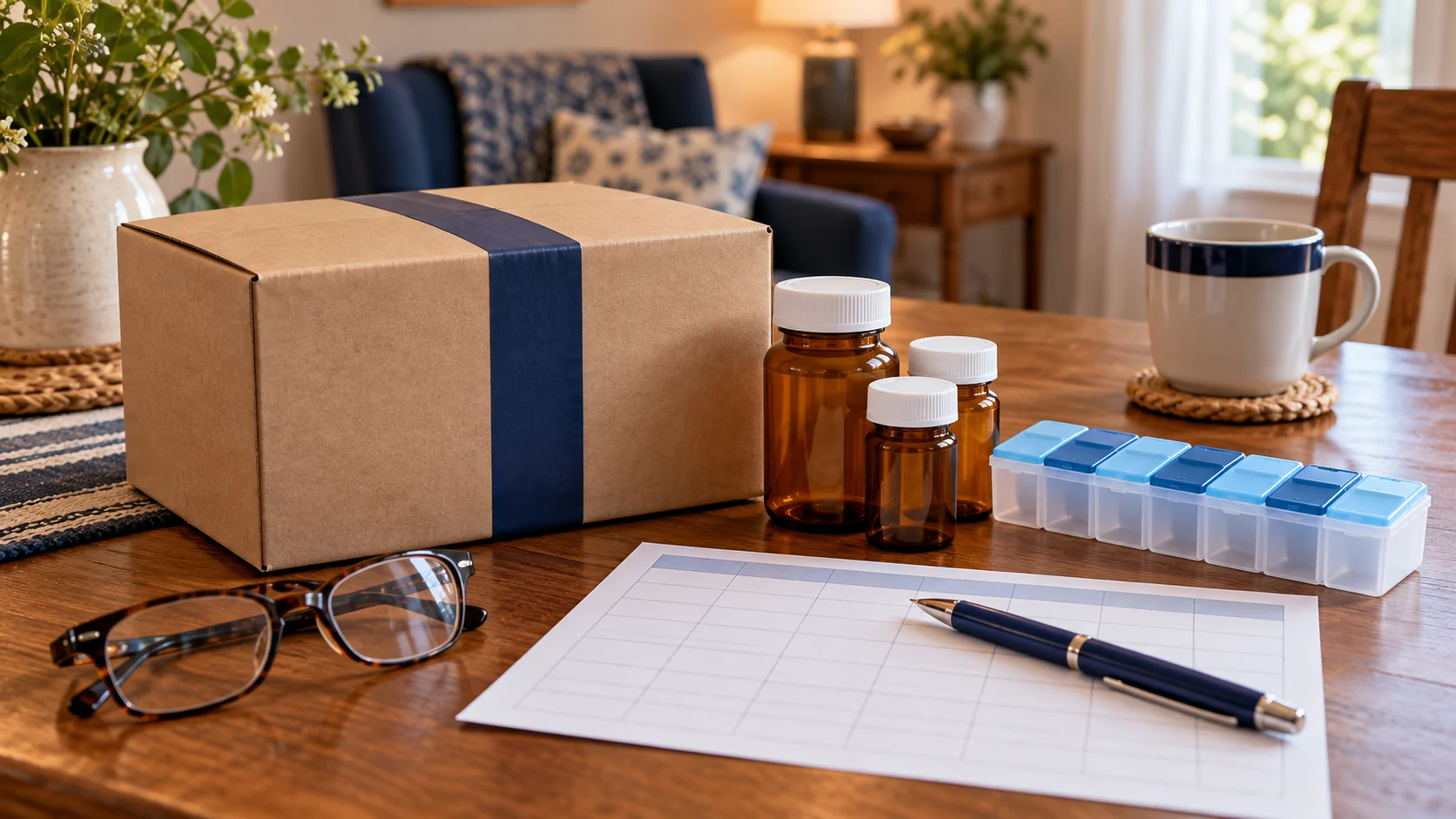
Refilling prescriptions is one of those small, recurring chores that can quietly become a burden — especially if getting to the pharmacy means arranging a ride, waiting in line, or making the trip every single month. Medication delivery promises to take that off your plate. But is it actually worth it? For many seniors, yes; for some, not quite. Here is how to tell.
What Medication Delivery Is
Medication delivery simply means your prescriptions come to you instead of you going to them. There are two common versions:
- Mail-order pharmacy — usually ships a 90-day supply through the mail, often tied to your Medicare drug plan's preferred pharmacy.
- Local home delivery — a nearby pharmacy delivers your medications to your door, sometimes the same day.
Most Medicare Part D and Medicare Advantage drug plans include a mail-order option as part of the prescription benefit.
The Convenience Case
The appeal is obvious for anyone who finds pharmacy trips difficult:
- No trips — especially valuable if driving is hard or you rely on others for rides
- Fewer refills to manage — a 90-day supply means four shipments a year instead of twelve pickups
- Automatic refills and reminders — many services reorder for you and alert you when a shipment is coming
- Discreet and steady — medications arrive on a predictable schedule
The Adherence Connection
Beyond convenience, delivery can support something clinicians care about a great deal: medication adherence, or taking your medications as prescribed. When refills are automatic and nothing runs out, people are less likely to skip doses simply because they could not get to the pharmacy in time. Our companion guide on how adherence affects health outcomes explains why that consistency matters so much.
What to Consider Before Switching
Delivery is not automatically the right fit. Weigh these:
- Timing — mail-order can take several days, so it is poor for a medication you need to start immediately. Keep a local pharmacy for urgent or new prescriptions.
- Temperature-sensitive drugs — some medications (like certain insulins) need careful handling; ask how the pharmacy ships them.
- Changing prescriptions — if your dose changes often, a 90-day supply can leave you with medication you no longer use.
- Pharmacist access — you lose the in-person counter conversation, though mail-order pharmacies offer phone consultations.
- Cost comparison — mail-order is often cheaper for maintenance drugs, but not always; compare per drug.
Compare Drug Coverage and Mail-Order Options
Prescription costs and mail-order benefits vary a lot between plans. Answer 6 quick questions and a licensed advisor can compare Part D and Medicare Advantage drug coverage available where you live — at no cost.
Check My EligibilityHow Medicare Part D Mail-Order Works
If you have Medicare drug coverage — through a standalone Part D plan or a Medicare Advantage plan that includes drugs — your plan likely has a preferred mail-order pharmacy. Through it, you can often get a 90-day supply of your maintenance medications, and many plans price that 90-day mail-order fill lower than three 30-day retail fills. The exact drugs covered and the price depend on your plan's formulary, so it pays to check your specific medications.
How to Decide
A simple way to think about it:
- Great fit if you take steady, long-term medications, find pharmacy trips hard, and want fewer refills to track.
- Use a hybrid — many people get maintenance drugs by mail-order and keep a local pharmacy for antibiotics, new prescriptions, and anything urgent.
- Maybe skip it if your prescriptions change frequently or you value in-person pharmacist time.
Your pharmacist and your plan are the best sources for the specifics. And if you want help comparing which plans offer the best drug coverage and mail-order pricing for your medications, a licensed Medicare advisor can walk you through it for free.