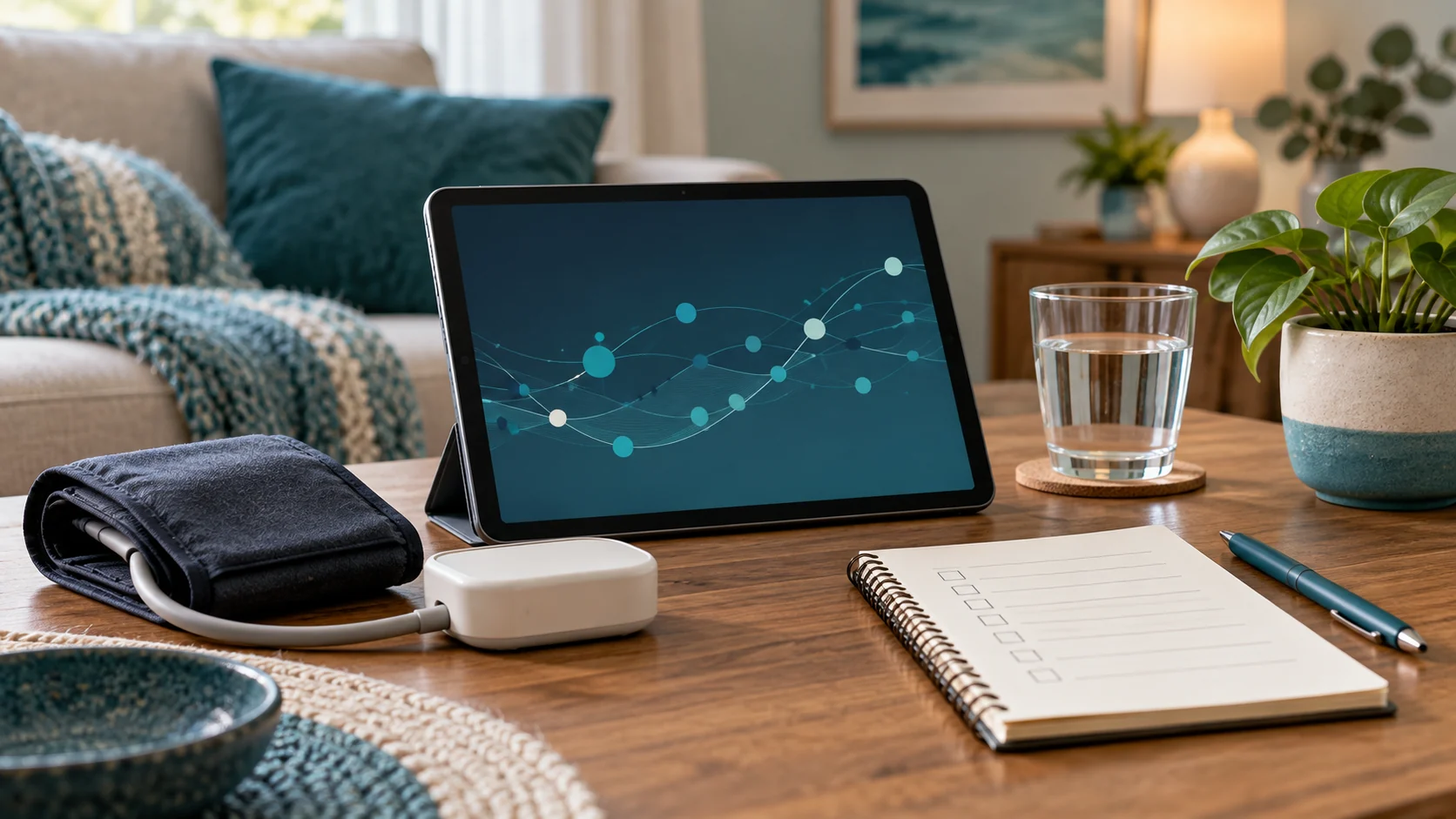
Not long ago, keeping tabs on a chronic condition meant frequent trips to the doctor. Today, a growing number of older adults track their health right from the kitchen table using simple connected devices — and their care team sees the results without anyone leaving home. This is remote patient monitoring, and it is quietly changing how seniors manage their health.
What Remote Patient Monitoring Is
Remote patient monitoring, often shortened to RPM, uses everyday medical devices that connect to a phone, tablet, or cellular network to send readings securely to your doctor or care team. Instead of a single blood pressure reading taken once at an appointment, your care team can see a steady picture of how you are doing over time — and reach out if something looks off.
How It Works
The basic flow is simple:
- Your provider decides RPM would help and sets you up with a device.
- You take readings at home — often just pressing one button.
- The device sends the data securely to your care team.
- Your team reviews it and contacts you if there is a concern or a needed change.
The devices are built for ease of use, and your care team provides setup and support. The goal is to make monitoring easier, not more complicated.
Conditions It Helps With
RPM is especially useful for conditions where regular readings help catch problems early:
| Condition | What Gets Monitored |
|---|---|
| High blood pressure | Blood pressure readings |
| Diabetes | Blood glucose levels |
| Heart failure | Weight and sometimes blood pressure |
| Chronic lung conditions | Oxygen levels (pulse oximeter) |
| Kidney disease | Blood pressure and related measures |
It can also help during recovery after a hospital stay, which pairs naturally with good discharge planning.
Why It Helps Seniors
- Fewer trips — less driving and waiting rooms, which matters for mobility and energy
- Earlier warnings — trends are visible before they become emergencies
- Peace of mind — for the patient and for family members
- Better teamwork — your care team has real data to guide decisions
Looking for a Plan That Coordinates Your Care?
Some Medicare Advantage plans include care coordination and extra benefits for chronic conditions. Answer 6 quick questions and a licensed advisor can check what is available where you live — at no cost to you.
Check My EligibilityDoes Medicare Cover It?
Medicare covers certain remote patient monitoring services when a provider orders them and delivers them under Medicare's rules, and some Medicare Advantage plans build supported monitoring programs into their coordinated-care benefits. Because coverage, eligibility, and any out-of-pocket costs vary by plan and situation, it is worth confirming the specifics with your plan or a licensed advisor.
How to Get Started
The starting point is a conversation with your doctor about whether RPM makes sense for your condition. If it does, your care team handles setup. And if you want to understand which Medicare plans offer the strongest care coordination for a chronic condition, a licensed advisor can review your options for free.