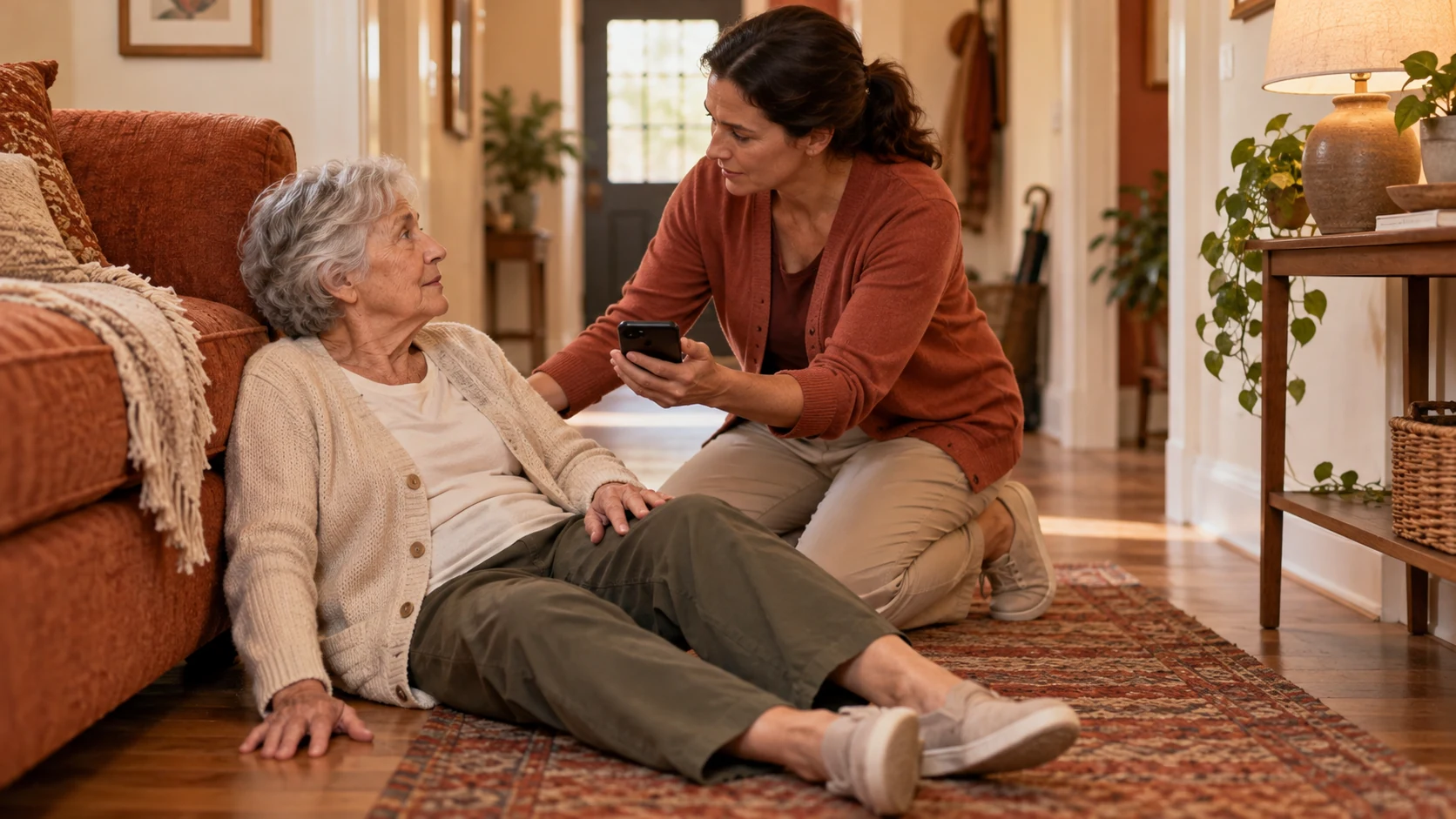
A fall is frightening, both for the person who falls and for anyone nearby. But the response in the first few minutes — and the follow-up in the days after — can make a big difference in the outcome. This guide walks through it calmly, step by step, for both the person and the caregiver.
First: Stay Calm and Assess
The instinct after a fall is to jump right back up. Resist it. Instead:
- Stay still for a moment and take a few slow breaths
- Check for pain or injury before moving — especially the head, hips, wrists, and back
- Notice how you feel — dizzy, faint, or hurt are all reasons to wait and call for help
How to Get Up Safely (If You Are Not Hurt)
If you have checked yourself and feel able to get up:
- Roll onto your side, then push up onto your hands and knees
- Crawl to a sturdy chair or piece of furniture
- Place your hands on the seat and bring one foot forward, flat on the floor
- Push up slowly using your arms and legs, then turn and sit down
- Rest and catch your breath before doing anything else
If You Cannot Get Up
- Call out for help or use a phone or medical alert device
- If you can, move to a carpeted or comfortable spot and stay warm
- Try to shift position occasionally to stay comfortable while waiting
- Keep a phone within reach whenever possible — and consider a wearable alert device going forward
Recovering From a Fall or Injury?
Some Medicare Advantage plans coordinate follow-up care, rehab, and home support. Answer 6 quick questions and a licensed advisor can check what is available where you live — at no cost.
Check My EligibilityIf You Are Helping Someone Who Fell
Your calm presence helps. Before anything else:
- Do not rush to lift them. Check first whether they are hurt and alert.
- If they seem seriously injured, call for help and keep them still and comfortable.
- If they are not hurt and can move, guide them slowly using a stable chair — do not pull them up.
- Protect your own back; get help rather than lifting a heavy load alone.
In the Days After
Even a fall with no obvious injury deserves follow-up. Tell the person's doctor about it. A good follow-up looks at why the fall happened — balance, vision, medications, blood pressure, or home hazards — so the next one can be prevented. If the fall led to a hospital or rehab stay, our guide on planning a discharge from rehab can help.
Preventing the Next One
Most falls come from a mix of factors that can be reduced. Our room-by-room guide on how to prevent falls at home covers the highest-impact changes. And if you are caring for someone at higher risk, a licensed advisor can tell you whether nearby Medicare plans include home-safety or care-coordination benefits — at no cost to you.